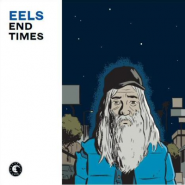
 Eels
EelsEnd Times
Score: 46
Eels, led by E (known to some as Mark Oliver Everett), produced its eighth LP, which released on the 19th. End Times focuses its lens on the depressing topic of divorce, along with other topics of similar nature, performed to often upbeat, generally major melodies and tunes. This odd combination of sounds, lyrics, and vocal stylings leads End Times to be, for the most part, an unsuccessful, though certainly not meritless release.
Unlike so many other elements (maybe every other element) of End Times, the instrumentals are intricate, generally exiting, and occasionally even delicate. Intertwining guitar lines define the album, while subtle percussion accompanies, and the occasional perfectly placed organ line fills in any white space. Whether tracks are slow or active - and the album frequently switches back and forth - lines are rarely overplayed. The album also encapsulates significant musical diversity, ranging from the absolute delicacy of “Little Bird” to the near-Early 60’s Twist sound of “Gone Man.”
It can hardly be said that E’s vocals dance over the delicately constructed instrumentals. His hoarse, raspy voice barely begins to exite the listener on “Paradise Blues,” easily the most active track; E’s literally screamed “woo!” may be loud, but it’s still grating. The vocals reach what is easily their worst point on End Times during “A Line in the Dirt,” with the frankly horrible falsetto. While the vocal style might fit well with the theme of the album, it definitely doesn’t help convince the listener that what E is singing about should be considered emotionally compelling.
End Times is effectively an album of E pining at length over an ex-wife, although he also wrestles with such problems as ‘going outside.’ The wording itself is painfully direct. The best imagery that can be mustered is along the lines of “She used to love me but it’s over now. / That was a good thing that’s gone and gone” (of “Gone Man”). E’s only major attempt at a metaphor is in the dialogue of “Apple Trees,” in which he declares, both melodramatically and extremely uncompellingly, that he feels like one apple tree among thousands and thousands. Throughout the album he considers the divorce, attempts to make up, and generally goes through the stereotypical, here dully-portrayed emotions of someone working through a generic tragedy.
What is then extremely disconcerting are the multiple upbeat, major, not quite jolly but certainly somewhat cheery tracks. It is somewhat astonishing that a band as experienced as Eels would not think twice about singing the lines: “well it’s a pretty bad place outside this door. / I could go out there but I don’t see what for” to a nice, airy set of instrumentals, and later insert the merrily sung (and falsetto) “na na na na…” yet this is just what “Mansions of Los Feliz” is.
As a whole, End Times is just not a good album. There are certain good elements (the instrumentals), but the vocals are stylized poorly and are uncompelling in their telling of the generally abysmal lyrics. There are certainly some terrific sections on the album, for example, “Unhinged” during the first entrance of the organ and vocals, at that point about as good as they ever are on End Times. However, the interlude tracks “Apple Trees” and “High and Lonesome” are nothing if not unnecessary. For what its worth, End Times certainly feels like a good album disfigured by a number of flaws, not a fundamentally bad album, but that is not enough to significantly salvage its score.